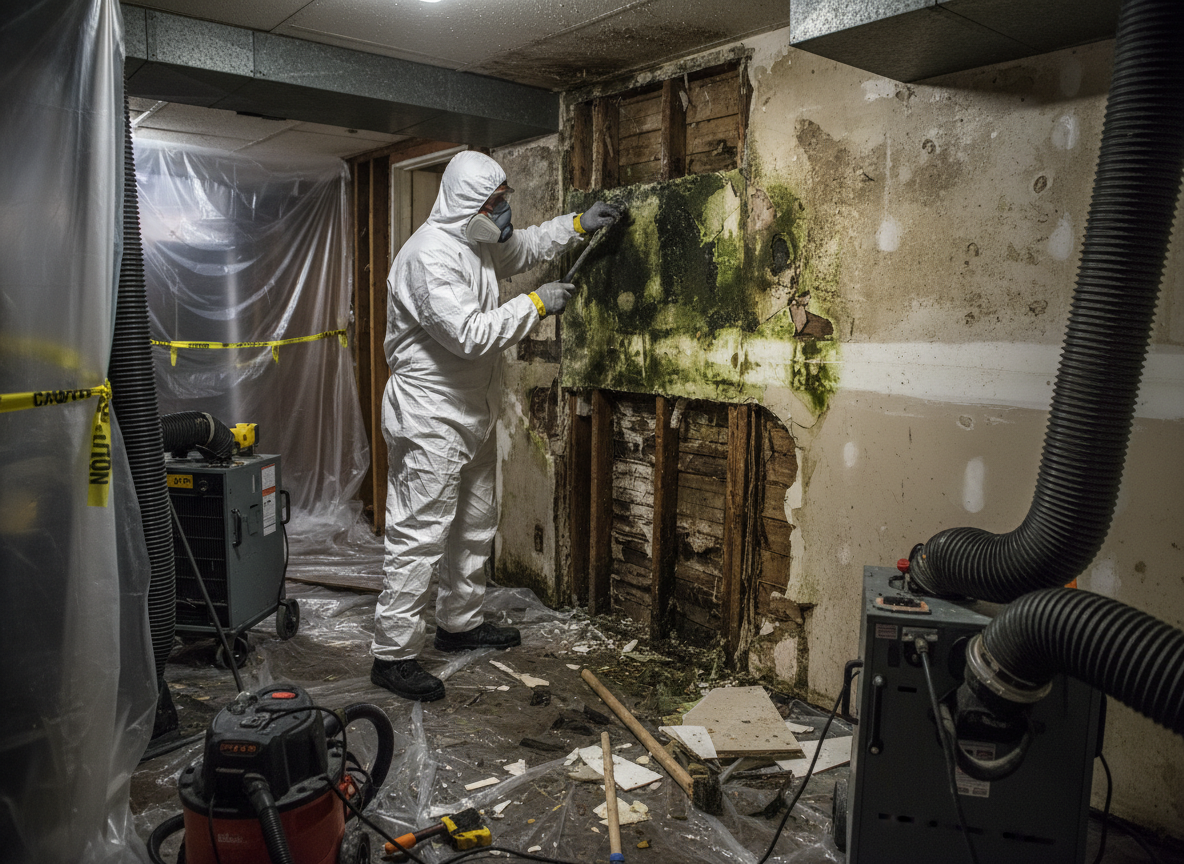
Water damage mold remediation in Montrose often starts with leaks in older stucco and wood-frame homes common around Downtown Montrose and near Crescenta Valley Park. The mild Mediterranean climate brings dry summers that hide slow plumbing or roof leaks until black mold appears on drywall or under flooring. Technicians must trace moisture through layered plaster and lath that traps water differently than newer builds, then remove affected sections without spreading spores into adjacent rooms. Containment barriers and negative air machines become essential because the compact lots in La Crescenta limit outdoor exhaust options.
After water intrusion, hidden mold frequently grows behind baseboards and in crawl spaces where soil moisture from occasional winter rains meets poor ventilation. In Glendale-adjacent neighborhoods, hillside drainage can push water toward foundations, requiring excavation checks before any remediation finishes. Removal includes HEPA vacuuming, antimicrobial treatment of framing, and disposal of porous materials like carpet padding. Final clearance testing confirms spore levels match outdoor air before reconstruction begins, especially important in homes near Montrose Shopping Park where foot traffic increases recontamination risk.
Edge cases include mold in HVAC systems serving multiple units in older Montrose buildings, where shared ductwork spreads spores between properties. Dry summers reduce visible growth but leave dormant spores that reactivate with any new leak. Proper drying uses dehumidifiers sized for Los Angeles County humidity swings rather than standard fans. Homeowners must avoid disturbing visible mold before professionals arrive, as DIY cleaning often pushes particles into wall cavities that later require larger repairs.
Technician insight
In Montrose, the thing that catches most people out with water damage mold remediation is hidden moisture trapped behind original plaster walls in homes near Two Strike Park, where the dry summers let small leaks go unnoticed until the mold reaches the framing and requires opening more of the structure than homeowners expect.
Hidden Leak Behind Kitchen Wall
A slow pipe leak in a Downtown Montrose home went unnoticed through the dry summer months. Inspection revealed mold extending into the subfloor and wall cavities. Containment was established, damaged materials removed, and the area dried before new flooring and drywall were installed.
How it works
- 1
Initial Assessment
Technicians arrive 24/7 from 3701 Ocean View Blvd to inspect water-damaged areas in Montrose homes using moisture meters and thermal imaging.
- 2
Containment Setup
Plastic barriers and negative air pressure isolate the work zone to prevent spore spread into living spaces or neighboring properties in La Crescenta.
- 3
Removal and Cleaning
Affected drywall, insulation, and flooring are removed; remaining surfaces receive HEPA vacuuming and antimicrobial application.
- 4
Drying and Verification
Industrial dehumidifiers and air movers dry the structure, followed by post-remediation air sampling before clearance.
Pricing
Cost depends on square footage affected, depth of hidden moisture, and whether HVAC cleaning is required.