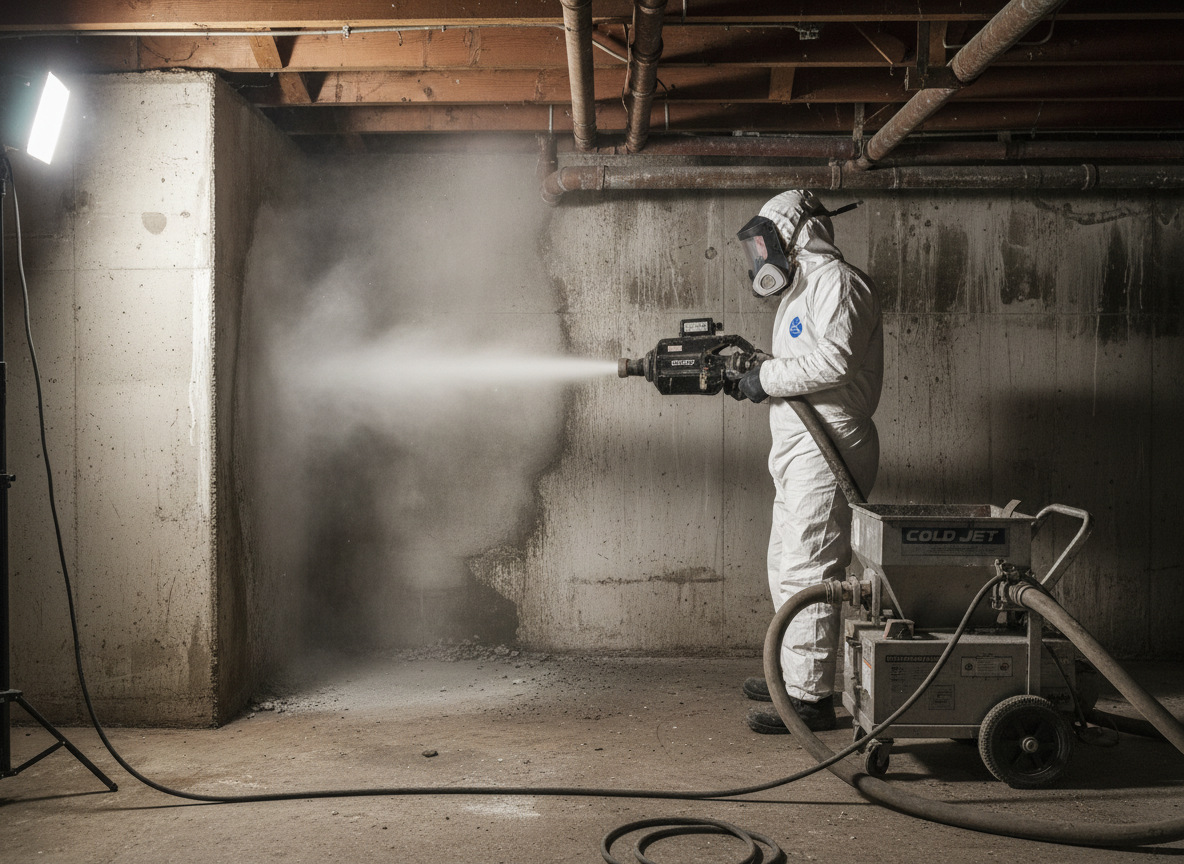
Dry ice blasting uses solid carbon dioxide pellets accelerated at high velocity to lift mold colonies from wood, concrete, and plaster surfaces common in Montrose homes built before 1970. The process sublimates on contact, leaving no residue and minimizing moisture that could restart growth in Los Angeles County’s mild Mediterranean climate. Technicians adjust blast pressure and pellet size when working around original lath-and-plaster walls in Downtown Montrose or stucco exteriors near Montrose Shopping Park to avoid cracking aged materials.
In La Crescenta and Glendale border properties, hidden mold often appears behind bathroom tile or under crawl-space insulation after winter rains. Dry ice blasting reaches these voids without disassembly while the dry summers reduce ambient humidity that might otherwise complicate drying. Crews ventilate with negative air machines and HEPA filtration to capture loosened spores before they settle on nearby Crescenta Valley Park trails or Two Strike Park fields.
Homeowners should note that dry ice blasting is not suitable for active water leaks or heavily saturated drywall; those conditions require source repair first. The method excels on structural lumber and masonry where traditional sanding would create excessive dust in tight Montrose lots. Post-blast inspection with moisture meters and borescopes confirms removal before any encapsulation coatings are applied.
Technician insight
In Montrose the thing that catches most people out with dry ice blasting mold is the age of the plaster and lathe in Downtown Montrose homes; the pellets can chip loose sections if pressure is not dialed back, especially after the dry summers leave the material more brittle than in Glendale properties.
Crawl-space mold after roof leak
A La Crescenta homeowner called after noticing musty odors following winter rains. Inspection found mold on joists beneath a slow roof leak near Crescenta Valley Park. Dry ice blasting cleaned the lumber without removing insulation. Clearance testing passed and the space was sealed.
How it works
- 1
Initial Assessment
Technicians inspect affected areas in the home using moisture meters and visual checks for mold extent.
- 2
Containment Setup
Plastic barriers and negative air machines isolate the work zone to prevent spore spread to unaffected rooms.
- 3
Dry Ice Blasting
Pellets are blasted at controlled pressures to remove mold from wood, concrete, and other hard surfaces.
- 4
Final Clearance
Air sampling and surface checks confirm mold levels are reduced before barriers are removed.
Pricing
Project pricing depends on square footage treated, access difficulty, and whether additional containment is required for multi-story homes.